


Washing & Care Guide.
A little care for the comforts that make a house feel like home.
Your favorite bedding deserves thoughtful care. From soft sheets and duvet covers to comforting quilts and pillows, simple everyday habits can help maintain the appearance and feel of your home textiles.
Explore our practical guidance for washing, drying, refreshing, and storing your bedding, with a gentler approach to the details that bring comfort to your day.
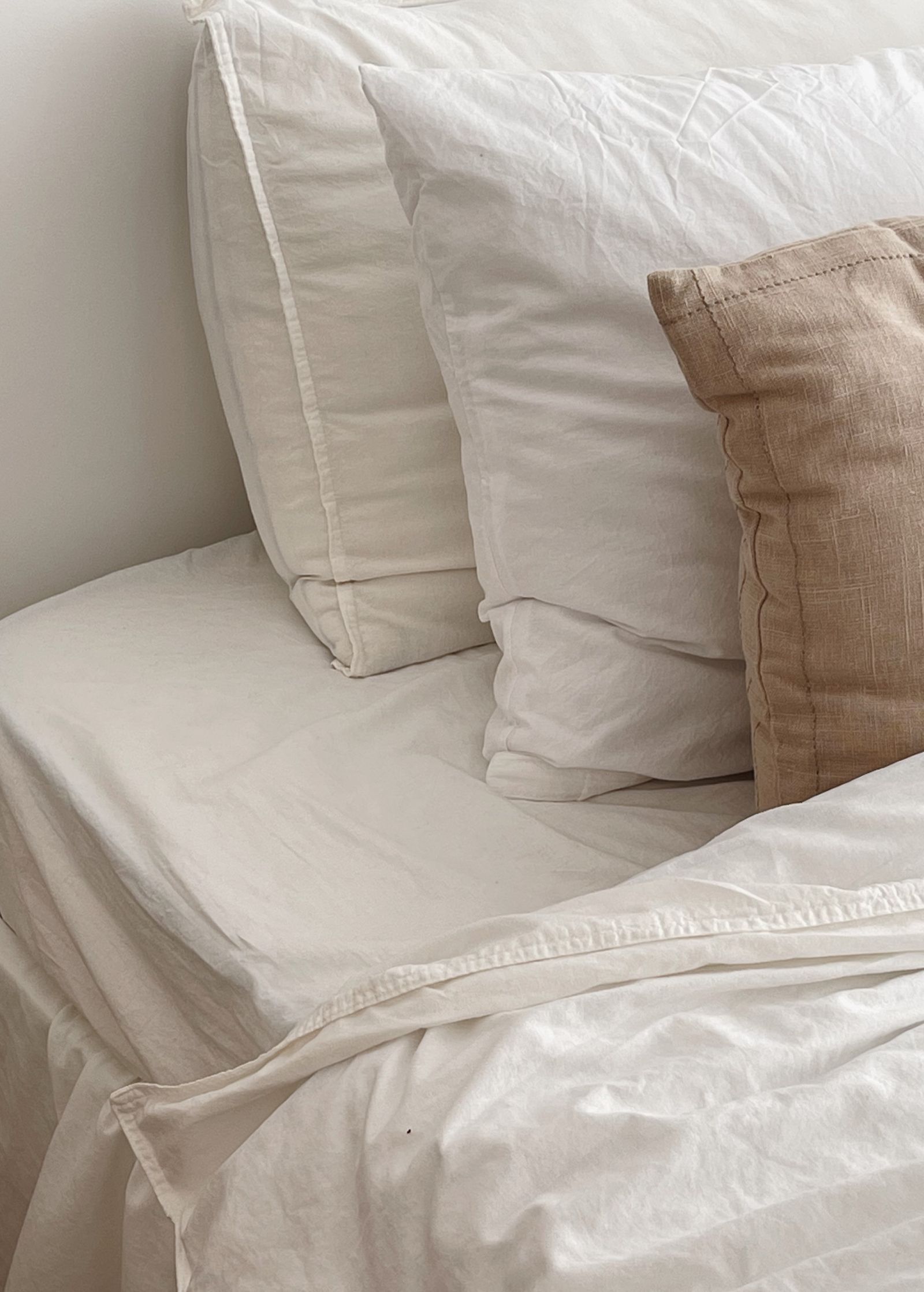
Beautiful bedding is part of everyday life. So is caring for it.
Freshly washed sheets, neatly arranged pillows, and the familiar comfort of a favorite blanket are simple pleasures worth appreciating. Caring for the textiles we use every day can become a natural part of creating a calmer home.
Every fabric and finished product has different needs, so the care label should always be your first reference. The guidance below offers general practices to help you build a thoughtful, practical bedding-care routine.
Small habits, thoughtful care.
Four simple principles can help you approach laundry day with greater care and confidence.
Follow the care label.
Always check the item's instructions before washing. Fabric composition, filling, stitching, and construction can all affect how a textile should be cleaned.
Separate with care.
Sort bedding by color, fabric, and cleaning requirements. Washing compatible items together may help reduce unwanted color transfer and friction.
Choose a suitable cycle.
When permitted by the care label, a gentle cycle and a suitable detergent can be a considerate choice for delicate home textiles.
Finish with patience.
Follow the recommended drying method and ensure bedding is fully dry before storing it. Excessive heat or improper drying can affect some fabrics and fillings.

A little attention goes a long way.
Bedding is part of our daily routines, from the first moments of the morning to the quiet comfort of bedtime. Creating a simple cleaning routine helps keep your sleep space feeling fresh and welcoming.
Rather than treating every textile the same way, take a moment to understand its construction and recommended care. A fitted sheet, a quilted comforter, and a filled pillow may each need a different approach.
Your bedding care, step by step.
A thoughtful laundry routine doesn't have to be complicated. These four stages offer a useful starting point for caring for washable bedding.
Read & Prepare
Begin by reviewing the care label. Check for stains, separate light and dark colors, and examine closures, decorative details, and delicate areas. Ensure the item is suitable for the washing method you plan to use.
Clean with Care
Use the water temperature, cycle, and detergent appropriate for the textile. Avoid excessive detergent and follow any special instructions for filling, embroidery, coatings, or fabric finishes.
Dry & Refresh
Follow the specified drying instructions. If tumble drying is permitted, use the recommended heat setting. If air drying is required, allow adequate airflow and support the textile as instructed.
Fold & Store
Once completely dry, fold your bedding neatly or return it to your bed. Store spare linens in a clean, dry place, using a breathable storage solution where suitable.
Gentle care for every soft layer.
Part of what makes bedding so inviting is its texture. Smooth sheets, softly folded duvet covers, and beautifully layered quilts each bring something different to the bedroom.
Cotton, linen, microfiber, and other textile materials may require different washing and drying methods. Even products made from similar fibers can have different instructions depending on their construction or finish.
Where an item's label allows it, gentler handling can help reduce unnecessary friction. For delicate pieces, professional cleaning or another specified method may be more appropriate than machine washing.
When treating stains, avoid aggressive rubbing. Use a method compatible with the fabric, and test any suitable cleaning product on a discreet area first.
Good care begins with understanding the fabric, not simply following the same routine for everything.

Different essentials, different needs.
Not all bedding should be cared for in the same way. Explore a few helpful considerations for different types of home textiles.
These recommendations are general. Always follow the instructions attached to your specific item, especially when they differ from the information here.
01 Bed Sheets & Sheet Sets
Sheets and pillowcases benefit from regular cleaning appropriate to their fabric and use. Before washing, check the care instructions and sort compatible colors and materials.
- Use the recommended wash temperature and cycle.
- Avoid overloading the machine.
- Check whether tumble drying or air drying is recommended.
- Fold or replace the sheets once fully dry.
02 Duvet Covers & Pillowcases
Duvet covers and decorative pillowcases may include zippers, buttons, ties, or other details that need extra attention.
- Remove the duvet insert or pillow insert before laundering a removable cover.
- Close compatible fastenings to help prevent tangling.
- Turn covers inside out if appropriate for their construction.
- Follow the care label for washing, drying, and ironing.
03 Comforters & Quilts
Comforters and quilts often contain multiple layers or specialized fillings. Their care depends on the outer fabric, filling material, quilting, and construction.
- Confirm whether machine washing is allowed.
- Use a suitably sized machine only when the item's instructions permit.
- Avoid unnecessary compression or rough handling.
- Ensure the filling is fully dry before use or storage.
- Choose professional cleaning when required by the label.
04 Sleeping Pillows
Pillow care varies greatly depending on the filling. Some pillows may be machine washable, while others require spot cleaning, special drying methods, or professional attention.
- Check the filling type and manufacturer instructions.
- Never assume all pillows can be placed in a washing machine.
- Wash removable pillowcases separately as permitted.
- Allow any cleaned pillow to dry thoroughly before reuse.
- Avoid high heat unless specifically permitted.
05 Blankets & Throws
Blankets and throws are available in many textures and fabric constructions. Lightweight woven textiles, plush materials, and delicate knits may each have their own requirements.
- Check the recommended washing method.
- Avoid friction or agitation beyond what the label allows.
- Dry using the appropriate method to help maintain the item's shape.
- Store clean, dry blankets in a protected space.
06 Mattress Protectors & Toppers
Mattress protectors and toppers may include waterproof membranes, foam, specialized fillings, or fitted components. These features can affect the cleaning methods they tolerate.
- Follow instructions for the particular material and construction.
- Do not machine wash foam or other non-washable components unless explicitly permitted.
- Avoid heat settings that could damage coatings or specialized materials.
- Return the item to your bed only when completely dry.
A refreshed bed. A renewed sense of comfort.
There is something quietly satisfying about returning to a freshly arranged bed. Clean pillowcases, smooth sheets, and softly layered textiles can help your bedroom feel welcoming again.

Taking time to make your bed, rotate your bedding when appropriate, and keep your sleep space tidy can turn simple maintenance into an enjoyable part of everyday living. Thoughtful care is one of the small ways we make home feel more comfortable.
Store your bedding with intention.
Proper storage matters, too. Whether you're putting away spare sheets or changing bedding for the season, a little organization helps keep your textiles ready for their next use.
Clean Before Storing
Store bedding only when it is clean and completely dry. Any remaining moisture may create unwanted odors or other storage-related problems.
Choose a Suitable Space
A clean, dry storage area away from excessive humidity and direct sunlight is often a good choice. Breathable textile bags may be suitable for many linens.
Handle Layers Gently
Fold suitable sheets and covers neatly. Avoid prolonged heavy compression of filled bedding unless the product's storage instructions permit it.
Care questions, answered.
Find guidance on common bedding-care questions. For product-specific cleaning instructions, always refer to the care label supplied with your item.
How often should I wash my bed sheets?
Should I wash all bedding in cold water?
Can I put my comforter in the washing machine?
Is fabric softener recommended for bedding?
How can I reduce wrinkles in sheets and duvet covers?
What's the best way to care for a pillow?
A little care makes everyday comfort sweeter.
Discover bedding and sleep essentials that bring softness and warmth into the moments you spend at home. Beautiful living begins with the everyday details.